Sydt Wilkummen, Rysender
Oh, you who wander the vast reaches of the Internet — linger a while and listen to the stories the Book of Life may write.
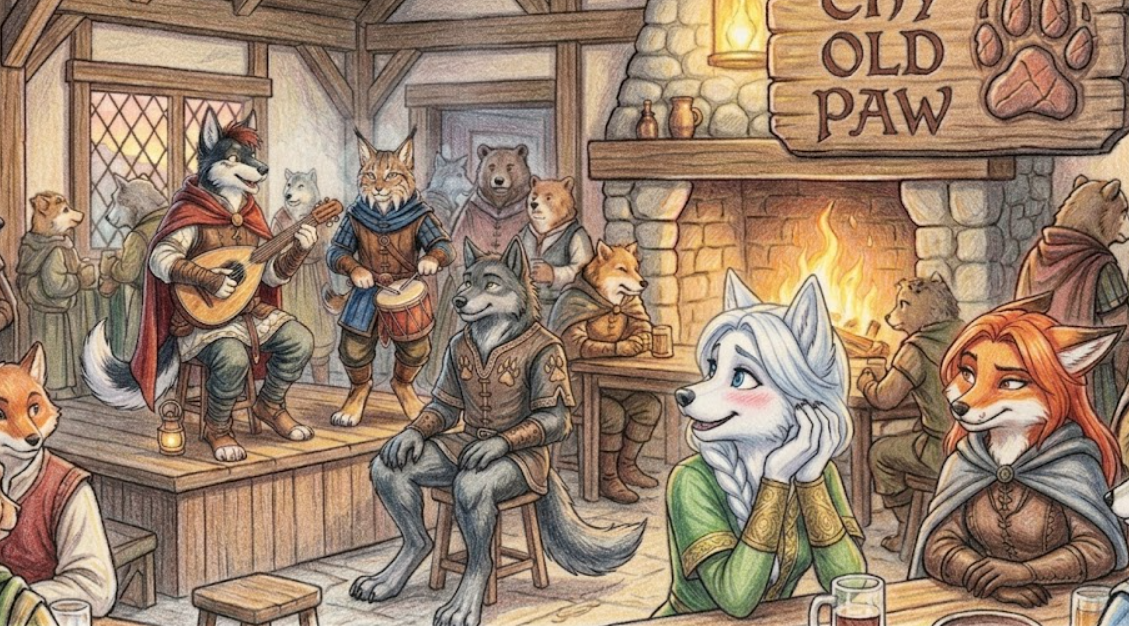
Taken from “The Echo of the Night” – which can be found in this lore…
*)“Sydt… what?”
Imagine visiting a website that, from time to time, carries you off on a journey into the 16th century — or at least into that curious realm between space and time.
But let us turn to the phrase itself.
The 16th century was a period in which the German language was still taking shape — an age of transition and transformation. And suddenly you encounter these words: “Sydt wilkummen, rysender.” They sound foreign and familiar at once.
“Sydt” is a variant of seid, the second-person plural form of sein (“to be”). In Middle High German, the form would have been sît. Here it functions as a polite address, expressing welcome and appreciation. The “y” marks a long “i” sound, similar to modern sie.
“Wilkummen” derives from Middle High German willkommen. It conveys the idea of being “well received” or “pleasantly welcomed,” and the spelling with k rather than c is typical of the period.
“Rysender” corresponds to modern Reisender (“traveler”), from Middle High German rîsende. Travel in the 16th century was often difficult and dangerous, so the arrival of a traveler was noteworthy. Again, the “y” signals a long vowel, and the ending -er already hints at Early New High German.
This greeting is more than a simple welcome. It is a small key to the past, offering insight into the language, culture, and society of the 16th century — a time shaped by the Reformation, the printing press, and the discovery of new worlds. German stood at a crossroads, where regional dialects and new influences intertwined.
Hospitality held great importance in both the Middle Ages and the early modern period. Travelers depended on the kindness of locals. “Sydt wilkummen, rysender” expresses precisely that spirit. While the form of address might change depending on social rank, the underlying courtesy remained constant.
In that same spirit, I welcome you to my website.