The Rustic Breakfast
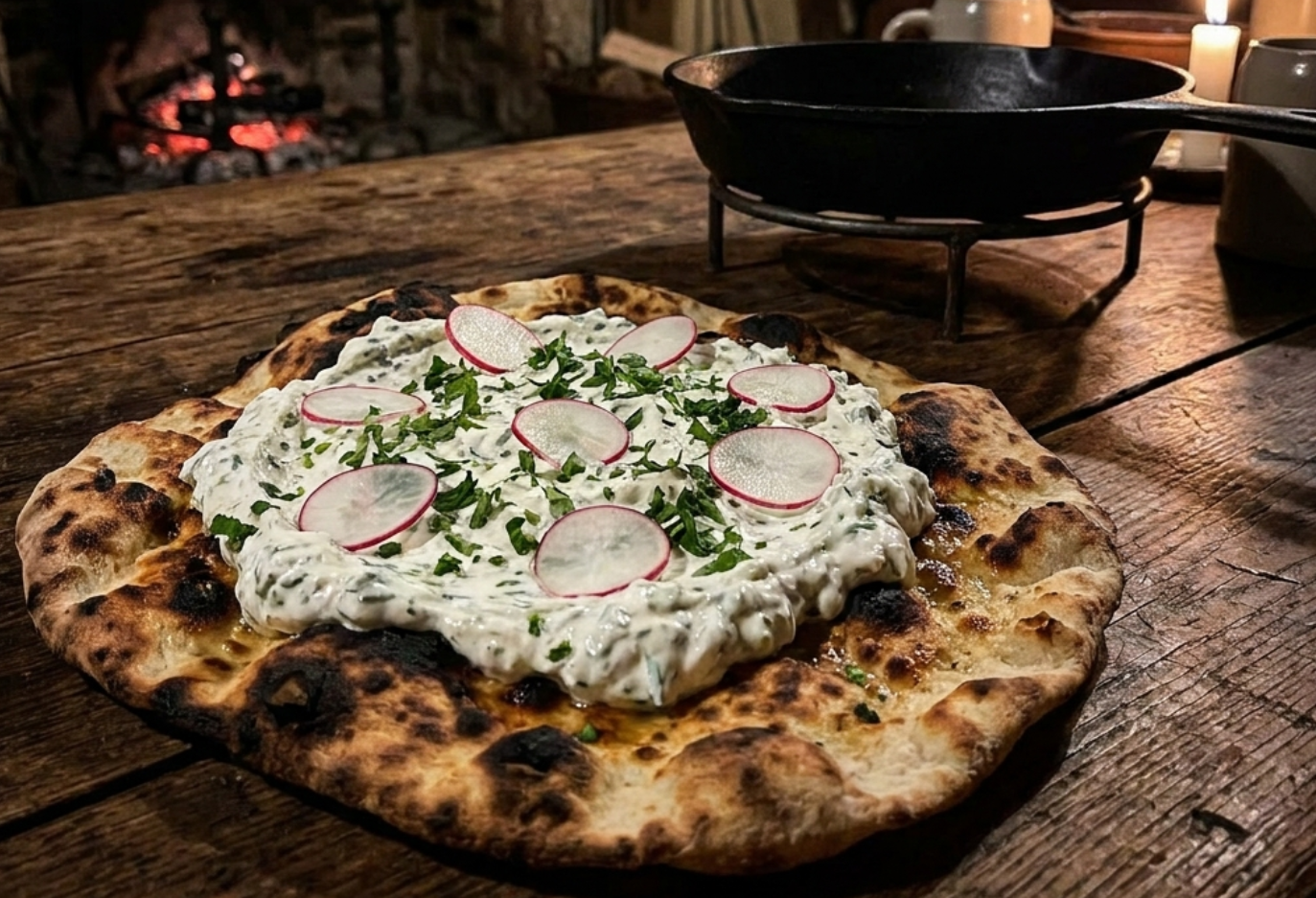 A rustic flatbread made without yeast, baked in a glowing cast-iron skillet. Badgers are impatient fellows with surly dispositions. They have neither the patience nor the leisure to wait for yeast dough to rise in the warmth. They want their bread quick, nutritious, and dense—spread with a cool, sharp herb quark that awakens the spirits. At the Dark Tavern, this bread is a proven remedy for keeping heated tempers at the table in check.
Ingredients from the pantry and garden:
2 cups fine wheat flour
1 teaspoon leavening salt (cream of tartar baking powder)
1 teaspoon fine rock salt
¾ cup lukewarm spring water
2 tablespoons melted butter (or good vegetable oil)
200 g rich country-style quark (or thick yogurt)
1 bunch fresh chives and parsley (finely chopped)
4 crisp radishes (sliced paper-thin)
Preparation:
Mixing the dough:
Take an earthenware bowl and mix the flour, leavening salt, and salt inside. Pour in the lukewarm water and melted butter. Stir vigorously with a wooden spoon until the ingredients come together into a rough, lumpy dough.
Kneading:
Sprinkle a handful of flour onto the wooden tabletop. Turn the dough out onto it and knead it with vigorous strokes of your paws for about two minutes, until it becomes smooth and pliable. Then, divide the loaf into four equal-sized balls and press them flat into round discs.
Baking in the Embers:
Get a heavy cast-iron skillet glowing hot*) over the stove’s coals (do not use any fat; the pan must be dry!). Bake each flatbread for two to three minutes per side until the dough bubbles and develops dark, crispy spots from the fire along the edges.
The Cool Topping:
Mix the tangy country-style quark with the freshly chopped garden herbs. Spread this cool, delicious mixture generously over the flatbreads while they are still steaming hot.
The Sharp Bite:
Finally, top the quark with paper-thin slices of radish. Their peppery bite shakes the weariness from your limbs and reminds your palate that you are truly alive.
*) Dear travelers, I need to take over for a moment:
“Glowing hot pan” is, of course, just poetic nonsense… You could certainly toss the dough into a “red-hot pan,” but the result would likely differ from what you intended. So, here is a brief explanation of what is actually meant:
For baking flatbread in a dry pan, a temperature range of roughly 200°C to 220°C is indeed the correct and ideal target.
The pan has reached the optimal temperature when a drop of water placed on the surface doesn’t evaporate instantly but instead dances across the metal as a beaded sphere (the “Leidenfrost effect”).
Make sure that a) the pan doesn’t sit on the stove for too long, and b) the stove isn’t left unattended—meaning the burners must be kept under watch.
And with that, I hand the floor back to my esteemed bard, Fian.
Gunnar